




Getting Started & Setup · 7 min
What do I need to smoke hookah? Accessories checklist
Hookah, bowl, foil or HMD, natural charcoal with charcoal lighter, tobacco, hose and mouthpiece: the basic equipment for your first session.
Black November until 22/11 See the deals New in 200 g: Anda Bestia Blanca, Hookain Witch Please To new arrivals
Black November until 22/11 See the deals RandM Tornado 7000: volume discount To liquids
Empty the glass base after the session and rinse it with lukewarm water. Loosen deposits with a suitable soft glass base brush and, if necessary, a suitable cleaner. Rinse until clear and leave the glass to dry open. You deal with limescale separately.

| What you see | What may be behind it | How to proceed |
|---|---|---|
| Loose bits or brown streaks | Tobacco and molasses residue in the used water | Empty out the water, rinse clear, brush off any remaining residue |
| Pale, firm ring at water level | Limescale from the water | Clean first, then treat with a descaler suitable for the glass base |
| Sticky film or musty smell | Residue after standing for a long time | Clean the inner wall, neck and closure thoroughly and dry them |
| Irregular line in the glass | Possibly a scratch or crack rather than a deposit | Check in the light after rinsing; do not scrub a crack away |
Here, the glass base means the water vessel under the hookah, not the tobacco bowl. Molasses is the moist mixture on the tobacco; if some of it gets into the water through the dip tube, it can remain on the inner wall. A ring is therefore not automatically limescale.
A glass base brush must fit through the neck and reach the wide inner wall. Choose a soft attachment in a suitable shape. Do not force an oversized brush head through the opening. Exposed wire does not belong on the rim of the glass.
The Argile cleaning set shows different attachment shapes. What matters is which of them fits into your glass without pressure. A narrow stem brush does not automatically reach the whole bottom of the glass base.
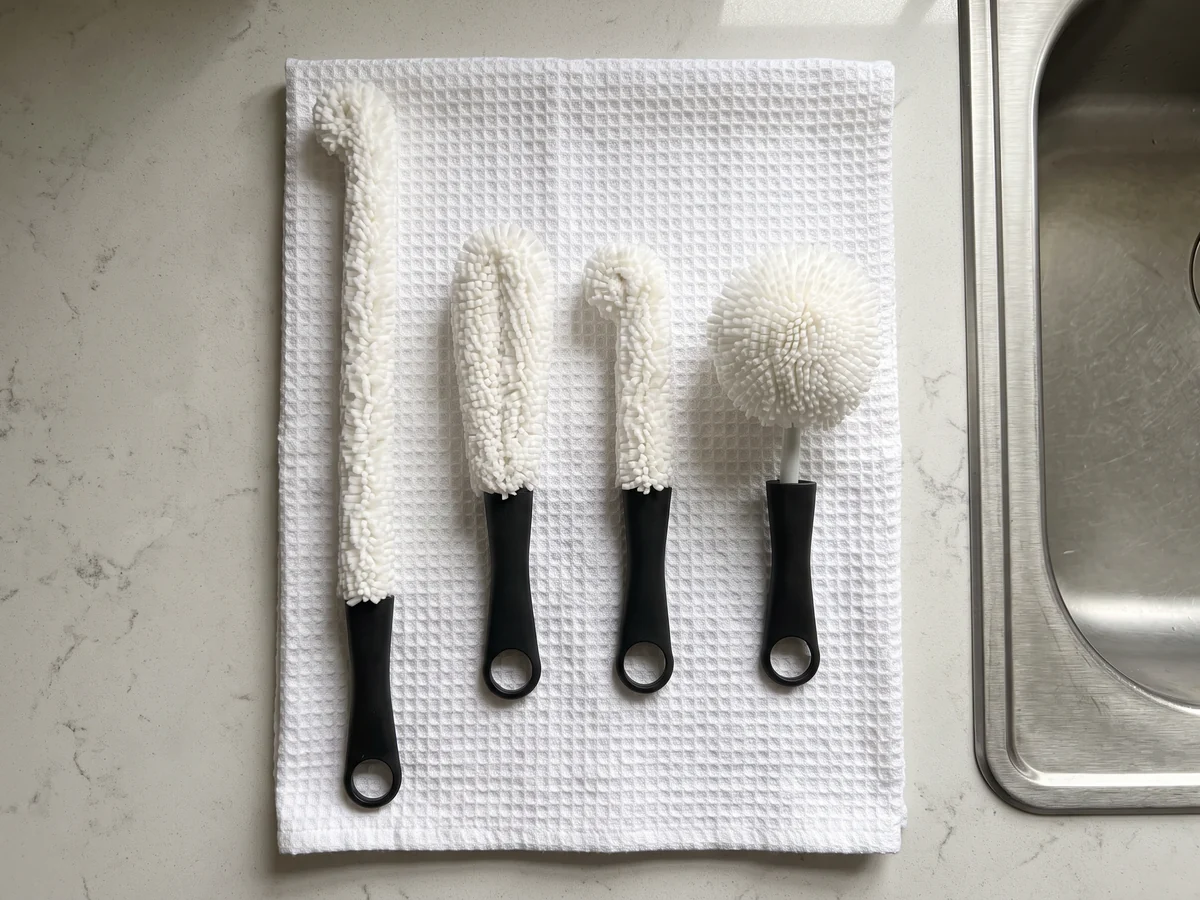
Work on the glass base once it is detached. A firmly bonded metal ring stays on the glass; it is not a part you pull off with every clean. Electronics or an electric hookah main device do not belong in these instructions.
Let the bowl and hot metal parts cool down first. Take off the base, that is, the connecting piece between glass base and stem, via the intended push-in, screw or click closure. Hold the glass base securely as you do so. Empty out the used water.
Rinse the inner wall with lukewarm water. Swirl the glass carefully and pour the water out again. That way you can see which deposits are really stuck. Do not hold a cold glass body directly under hot water.
If water and brush are not enough, use a product suitable for the glass base. Follow its dosage and soak time. The metal ring, seals and coloured surface must also tolerate the application. Do not mix cleaners.
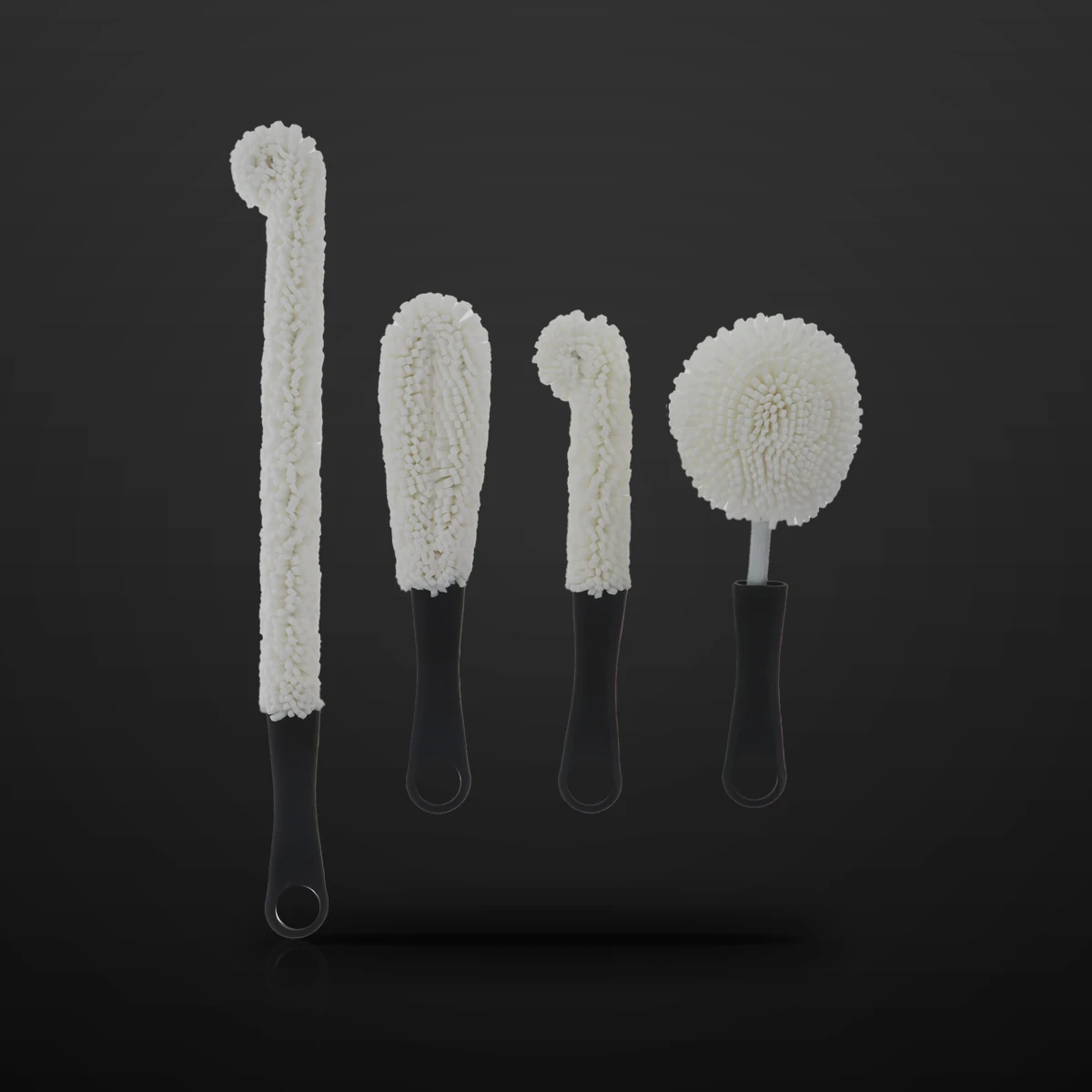
Insert the suitable soft attachment carefully. Work the waterline, shoulder and bottom with little pressure. Turn the glass base so that you can reach the remaining areas. The photo shows the attachment shapes, not a cleaning test that has been carried out.
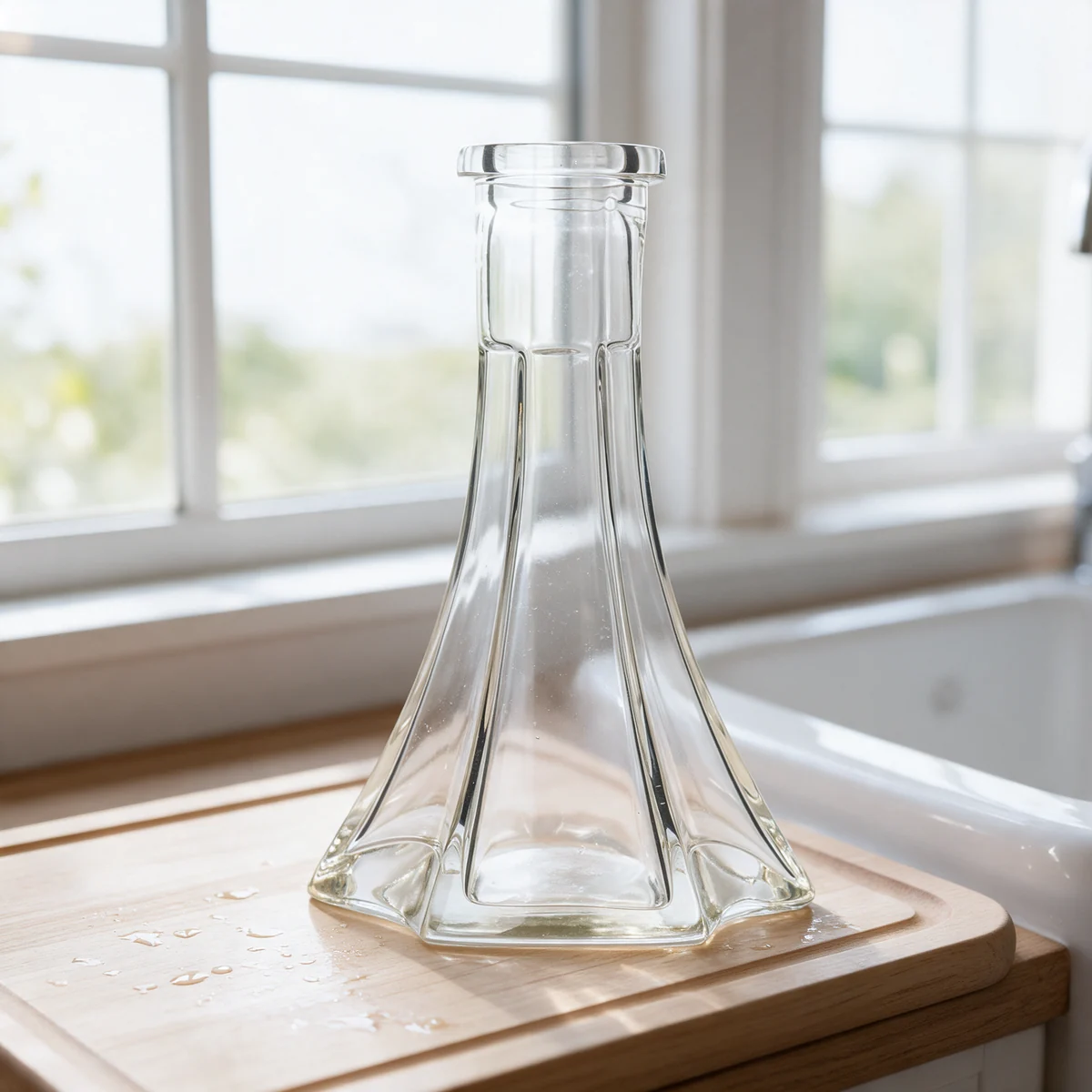
Rinse several times with clear water. Check the neck and accessible sealing surfaces to see whether any residue is left. Neither foam nor a smell of cleaner should remain. The product view shows the open neck of a push-fit glass base.
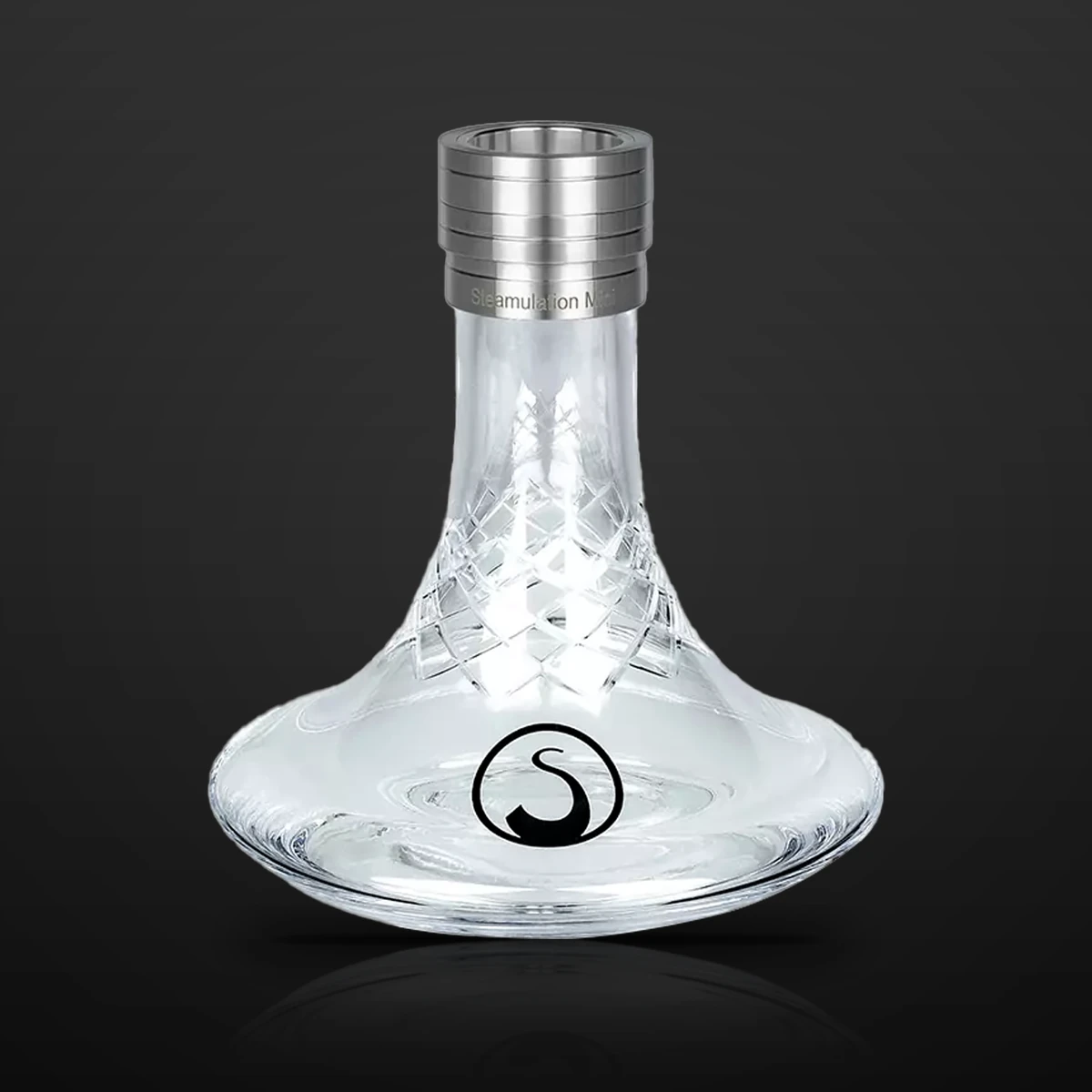
Dry the outside with a clean cloth. Let the glass base drain open on a stable surface and dry inside. Look at the glass rim, bottom and metal ring in the light. The inspection view shows an intact Mini Gen 2 Crystal Bowl.
If a pale, firm deposit remains after water and brush, descaling can be the next step. Remove tobacco residue and other dirt beforehand. A limescale remover does not replace this cleaning.
| Task | Suitable approach | What you look out for |
|---|---|---|
| Loosening tobacco and molasses residue | Lukewarm water, suitable brush, glass base cleaner if needed | Soak time and dosage of the product used |
| Loosening limescale deposits | A descaler suitable for the glass and the attached parts | Do not apply acid to the metal ring, bonded joint or decoration without checking first |
| Removing product residue | Rinse several times with clear water | Check for smell and film; absence of foam alone is no proof |
Vinegar and citric acid are common household remedies against limescale. Use them only if your glass, including its surface and closure, is suitable for it. The same does not automatically apply to a plain glass surface and a lacquered glass base with a bonded ring. A blanket mixture or an overnight bath is therefore not right for every model.
Treat the glass and closure as one component. A bonded ring stays on; a removable part you detach only via the intended system. Do not apply cleaner to the bonded joint without checking first.
A white or matt glass base also has its own care limits. Do not scrub the outer surface with scouring pads, and do not automatically treat it with the product for clear glass. The Ultimate White Matt shown illustrates the surface and metal closure; it is not an approval for any cleaner.
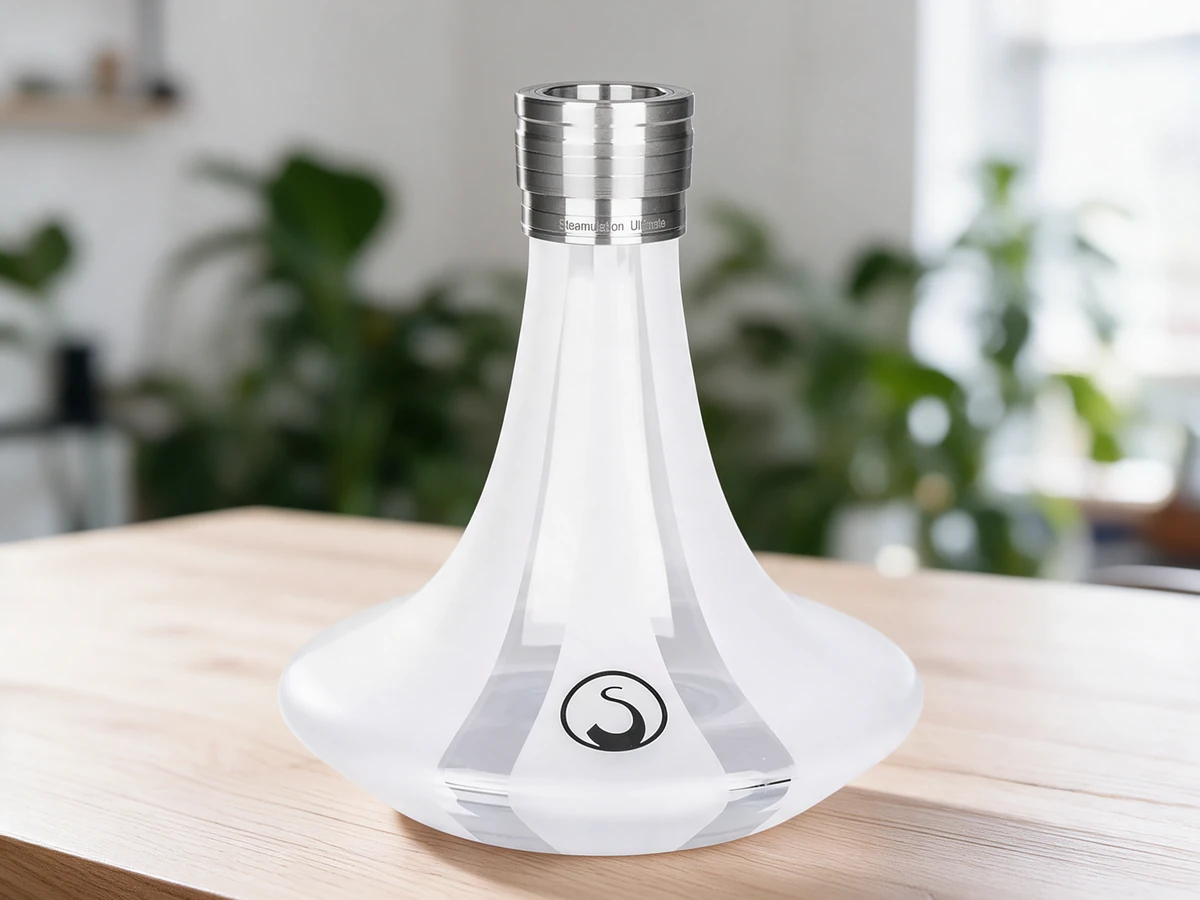
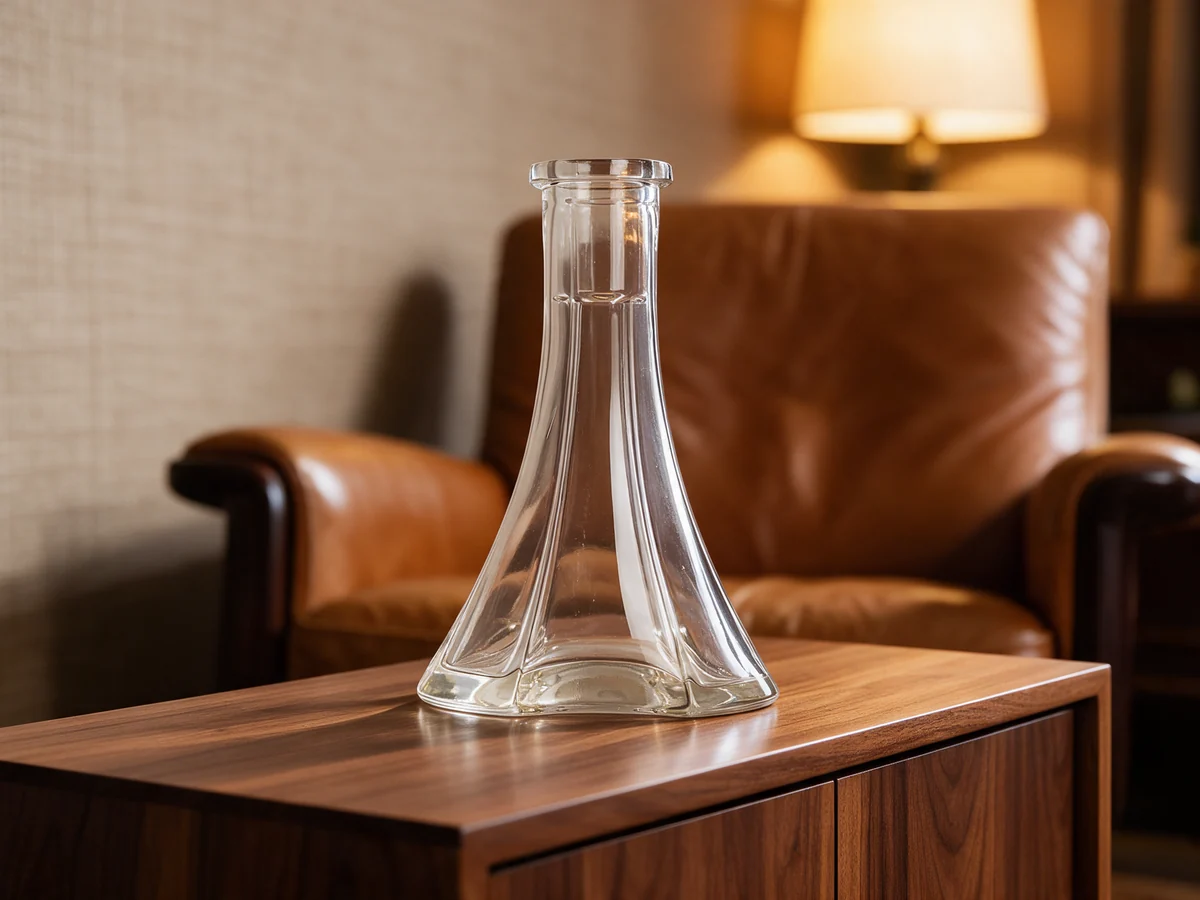
On the Moze Neo Lux, the connection sits at the glass neck. Check the rim and the sealing surface; you check the matching glass base seal separately.
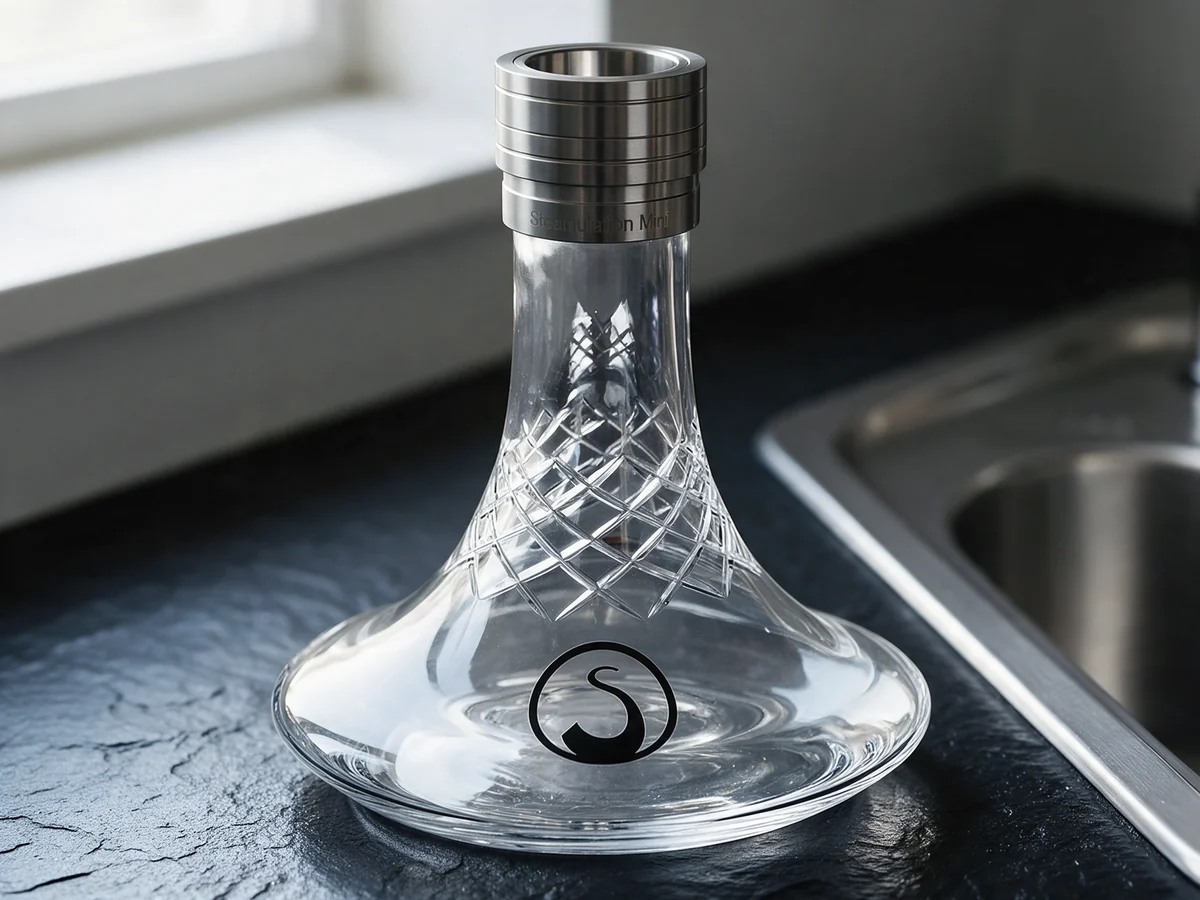
On the Mini Gen 2 Crystal you can see the metal ring on the glass. Care instructions must take both parts into account. The ring is not a general invitation to take it apart.
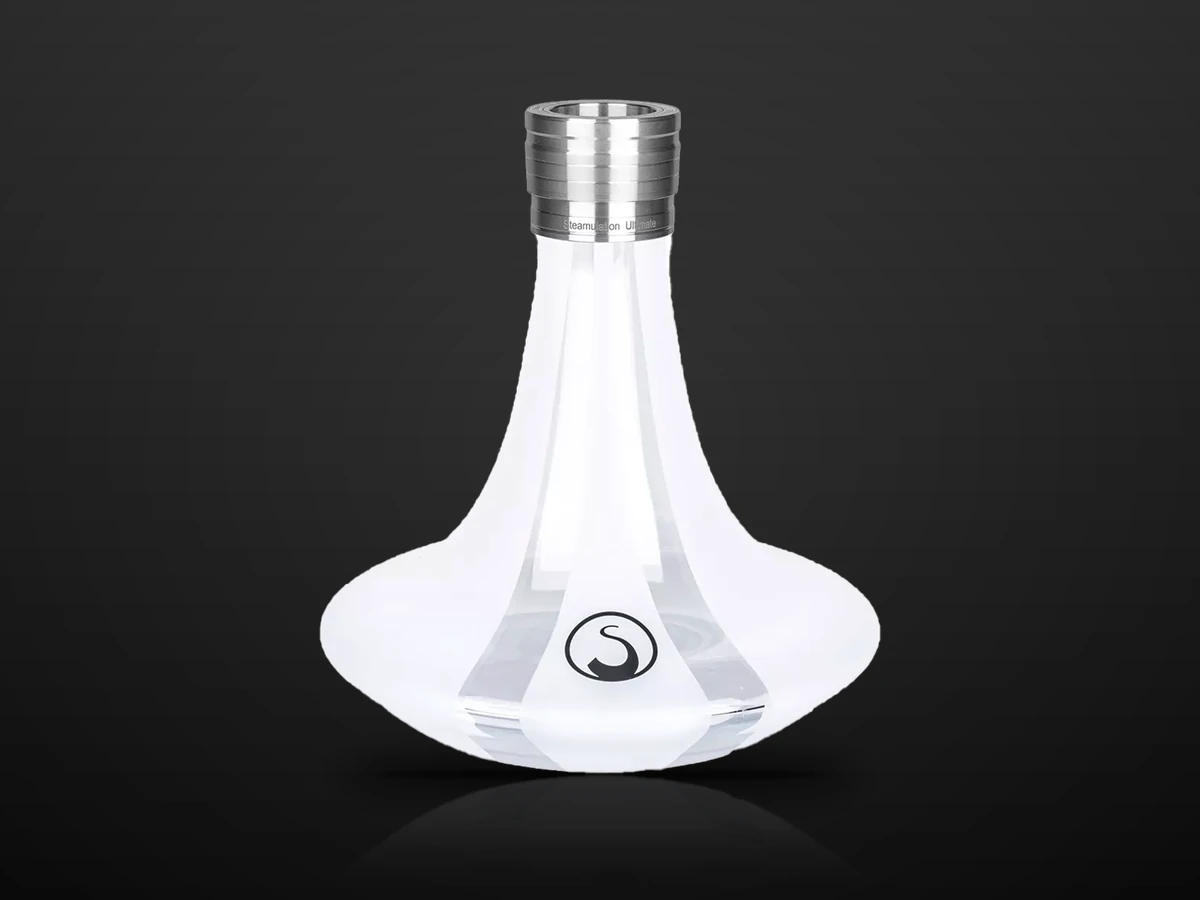
The Ultimate White Matt has a different outer surface from clear glass. You do not treat discolouration or abrasion with vigorous scrubbing on suspicion.
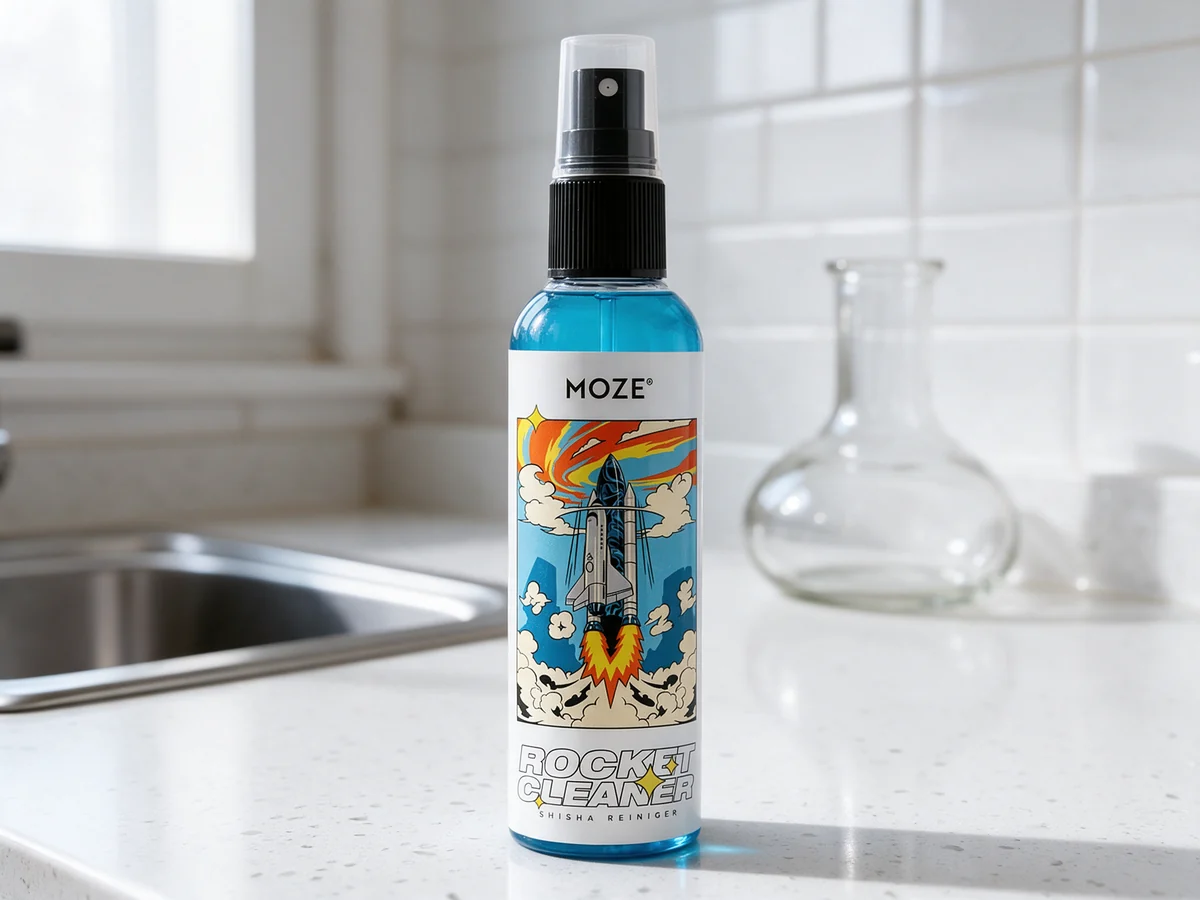
The photo shows the Moze Rocket hookah cleaner. Before use, read the dosage and soak time on the product you are using; do not transfer the formulation of a different product.
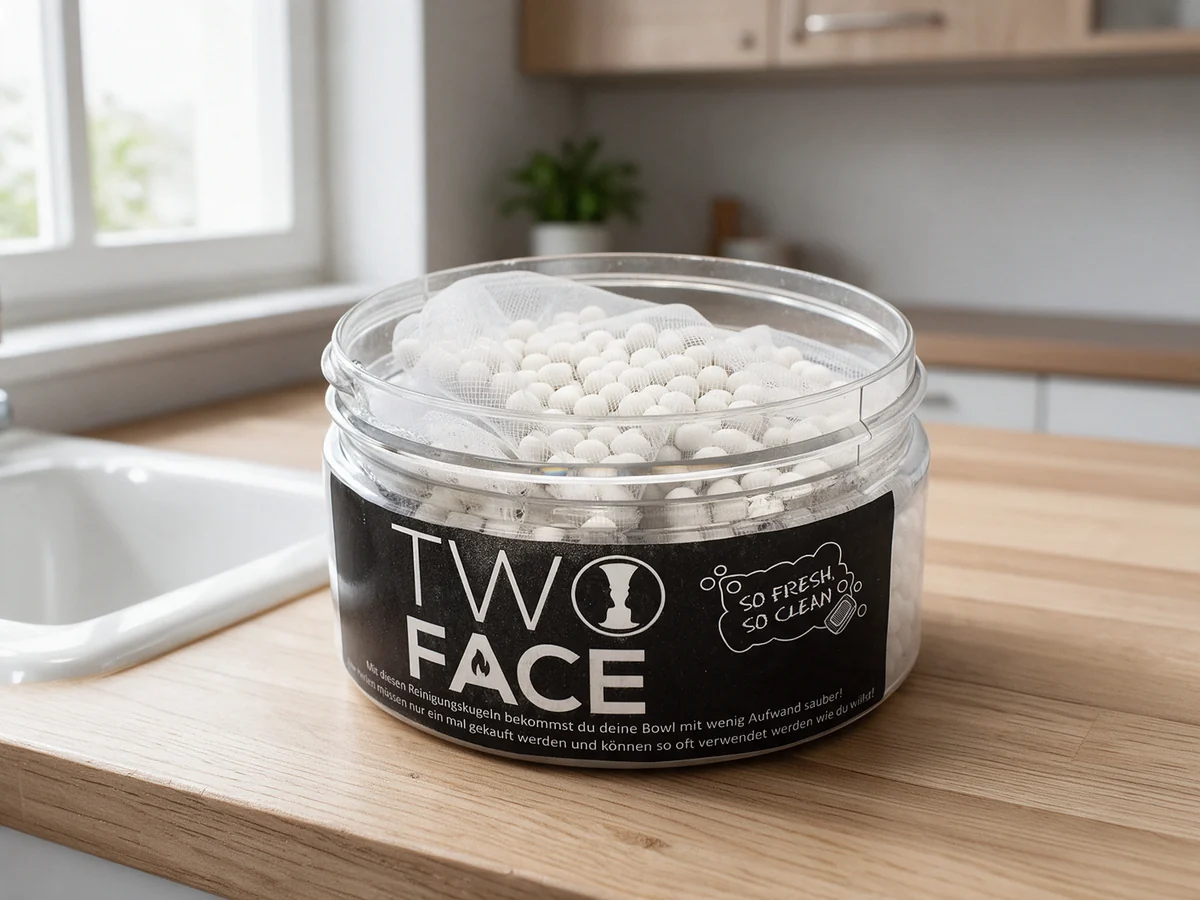
The Two Face cleaning balls are an accessory for suitable glass bases. Observe their instructions for use and the care limits of your glass; vigorous shaking is not a general cleaning recommendation.
Empty the water after the session and rinse the glass base before residue dries on. For longer breaks, leave it empty and open to dry. Brush it thoroughly if you see a film or deposits. How quickly a limescale ring forms also depends on the water used.
If it smells musty despite a clean glass base, check the other damp parts separately. You will find the sequence for stem, hose and bowl under Cleaning a hookah. For the cold charcoal attachment, there is Cleaning an HMD and Smokebox. Fill in fresh water for the next setup and set the water level to match the dip tube.
Clean it by hand as long as there is no explicit approval for the complete component. Approval for glass alone says nothing about decoration, seal, bonded joint or metal ring. Even a glass that looks big must stand securely and must not knock against other parts.
For normal care, use lukewarm water and avoid abrupt temperature changes. Individual borosilicate models have an explicit hot-water approval; that does not automatically apply to other glass bases. Clear glass or a thick bottom is no proof of such temperature resistance.
Try a soft attachment whose shape matches the inner wall. For suitable glass bases, special cleaning balls are also an option: swirl carefully and observe the instructions for the product. Do not fill in just any metal, sand or sharp-edged objects to replace a brush that is too small.
For glass bases suited to it, a little low-odour washing-up liquid can loosen residue. Then rinse several times with clear water until no smell or film remains. Lots of foam does not automatically make the glass cleaner. Washing-up liquid also does not reliably dissolve a firm limescale ring.
If a line stays unchanged after rinsing, check the spot in the light from inside and outside. Scratches, cracks and worn-off outer colour do not disappear with cleaner. Do not keep using a cracked glass or a glass base with a sharp, damaged rim; look for a suitable replacement glass base.

About the author
Julian
Hookah expert
For this article
From the same series
Getting Started & Setup · 7 min
Hookah, bowl, foil or HMD, natural charcoal with charcoal lighter, tobacco, hose and mouthpiece: the basic equipment for your first session.

Getting Started & Setup · 6 min
Which hookah to buy? Material, size, closed chamber, diffuser, 18/8 ground joint and scope of delivery explained, plus models for every budget.

Getting Started & Setup · 4 min
Same flavour, different taste? Eight values for your session sheet: tobacco amount, bowl, charcoal, water, cleaning. Change only one per session.
Advice & knowledge
Tools
Knowledge
