




Vape Guides · 6 min
MTL, RDL or DL: Which Draw Style Suits You?
MTL, RDL or DL: ohm, watts, airflow, e-liquid and nicotine strength compared by draw style, and which pod system or tank suits your draw.
Black November until 22/11 See the deals New in 200 g: Anda Bestia Blanca, Hookain Witch Please To new arrivals
Black November until 22/11 See the deals RandM Tornado 7000: volume discount from 5 bottles To liquids
Your battery-powered mod needs the right, undamaged batteries. Check the type, current rating and wrap, charge with a suitable charger, and carry spare cells in a battery case. Protection circuits in the device don't replace these checks. If you notice unusual heat or damage, stop using the device.

| Type | How the power supply works | What to keep in mind |
|---|---|---|
| Regulated battery-powered mod / mod | Electronics control the power going to the atomizer; batteries can be built in or removable | Controls and approved batteries of your specific model |
| Pod system with built-in battery | The battery sits inside the device and charges through the intended charging port | Keep the device closed; swap the matching pod separately |
| Mechanical mod | No electronic power regulation | Requires your own knowledge of current, resistance and cell load; the guidance here applies to regulated devices |
The battery-powered mod supplies the atomizer with power. In everyday vaping it's also just called a mod. The coil, meaning the atomizer head with its heating structure and cotton, sits in the tank or pod. Battery and coil are different components. Changing the head is covered in How to change and prime a coil.
Start with your mod's manual: which size, cell type and current rating does it specify? 18650 and 21700 are different battery formats. A battery has to be explicitly approved for the device; a similar casing or more capacity isn't enough.
An adapter also depends on the model. Don't force a cell that's too big into the battery compartment, and don't build your own adapter. Buy clearly labelled cells with traceable technical data.
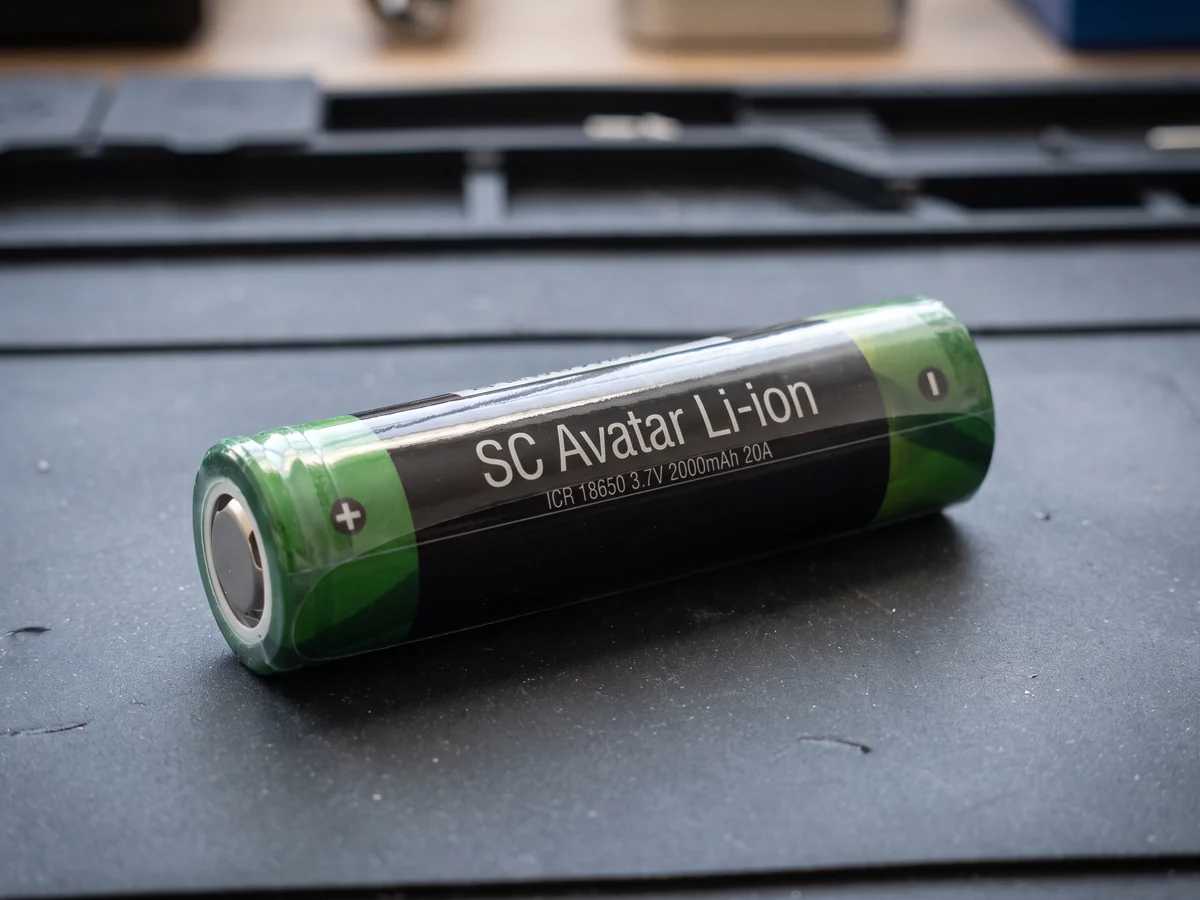
| Spec | Meaning | How to use it |
|---|---|---|
| 18650 / 21700 | Cell form factor | Match it against the device's battery bay and approval |
| mAh | Capacity: how much electric charge the cell can store | Relevant for runtime; says nothing about the permitted current load |
| A / amps | Permitted current under the stated conditions | Check the current rating against the device; tell peak current and continuous current apart |
| V / volts | Electrical voltage | Cell chemistry and charging method have to match |
A high mAh figure doesn't automatically make a battery suitable for high power. Likewise, a large amp number on the label with no stated measurement conditions isn't a confirmed continuous load. The permitted discharge and the charging current are two different limits. Don't carry a wattage approval over from another cell.
The wrap is the insulating shrink sleeve around the cell. A small tear isn't a cosmetic flaw: exposed metal can allow a short circuit. Don't keep using a damaged wrap, and don't tape over it as a repair.
Switch the device off, unplug it from the charging cable and open the battery compartment the way it's meant to be opened. Only remove cells that are at normal temperature and undamaged.
Check the whole cell: tears in the shrink sleeve, missing insulation at the positive terminal, dents, corrosion or leaked fluid are all reasons not to use it. The photos show intact product views, not examples of damage.
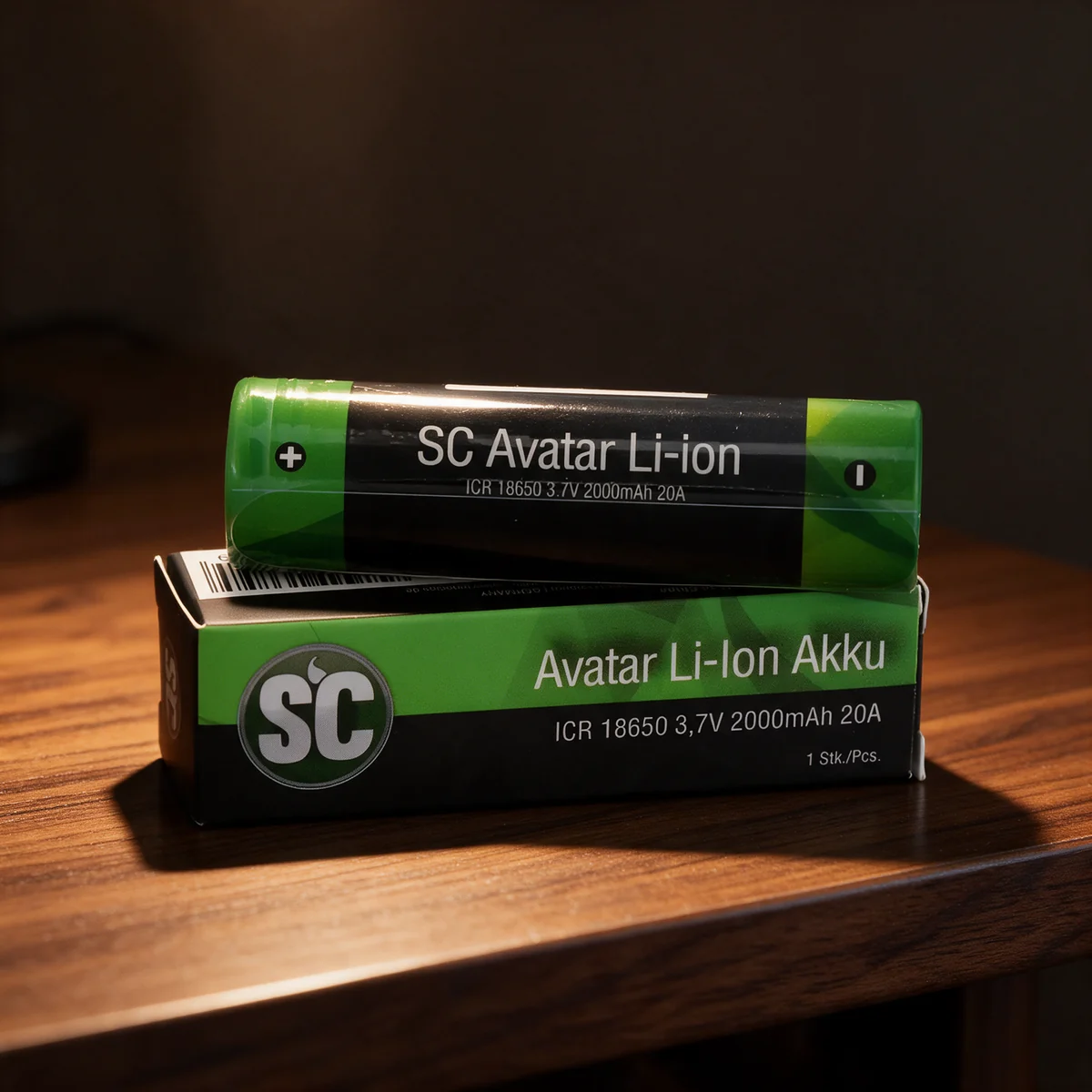
Compare the exact type designation with the device's approval. Follow the plus/minus marking in the battery compartment. The cell mustn't jam; close the cover without force.
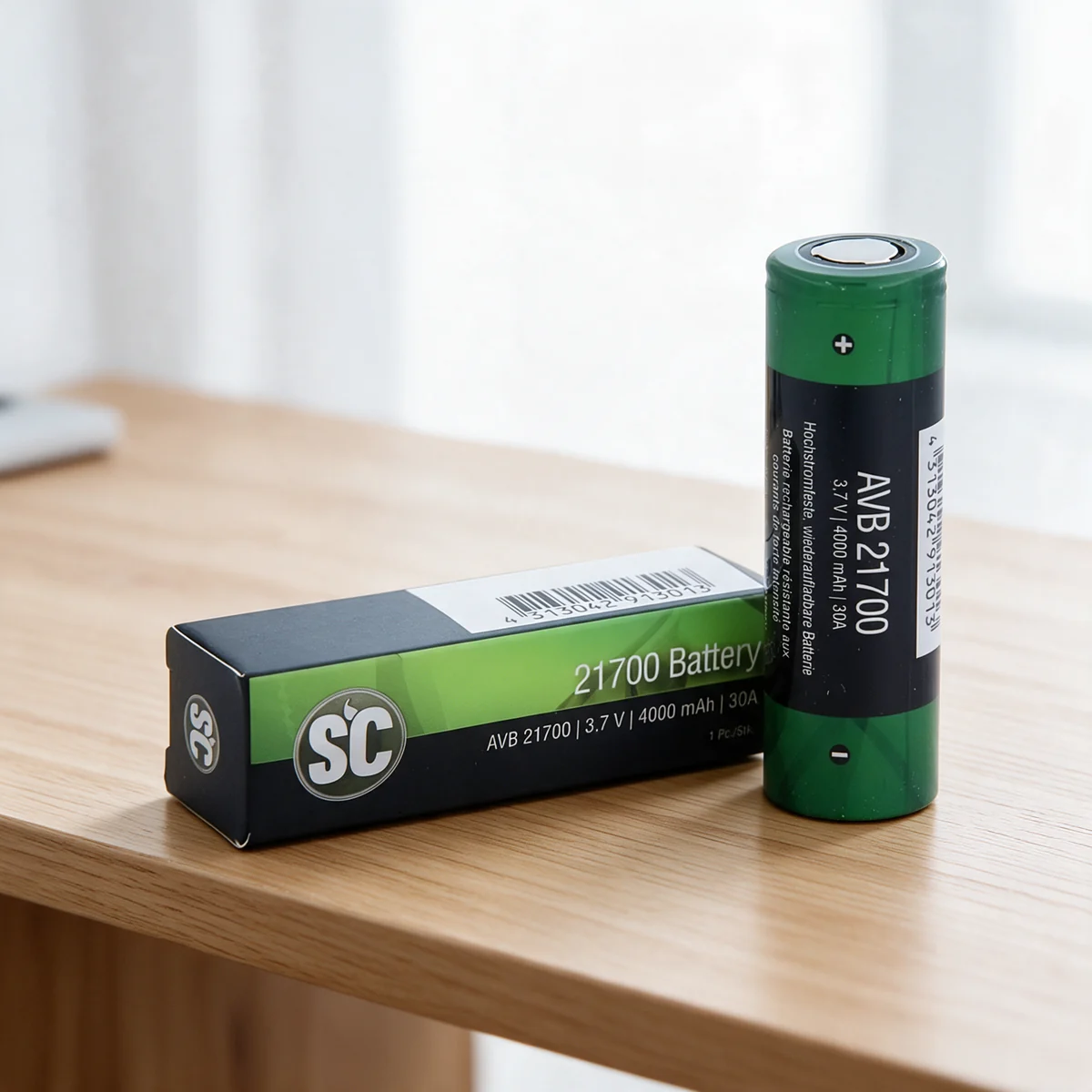
The battery compartment, contacts and charging port have to be dry and undamaged. If an error message persists or the device gets unusually hot, stop using it.
For suitable replacement cells you'll find the SC-18650 cell and the SC-21700 cell here. Which of them your mod needs depends on its exact battery approval.
Use a charger that supports the cell chemistry, size and permitted charging current of your batteries. A USB-C plug alone doesn't prove that match. Follow the plus/minus marking in the charging bay.
Charge on a solid, clear surface, away from anything flammable. Stay awake and nearby while it charges. Unplug the charger from the power once charging is done. The XTAR SC2 is a charger for suitable lithium-ion cells; check the specific cell and the charging current.
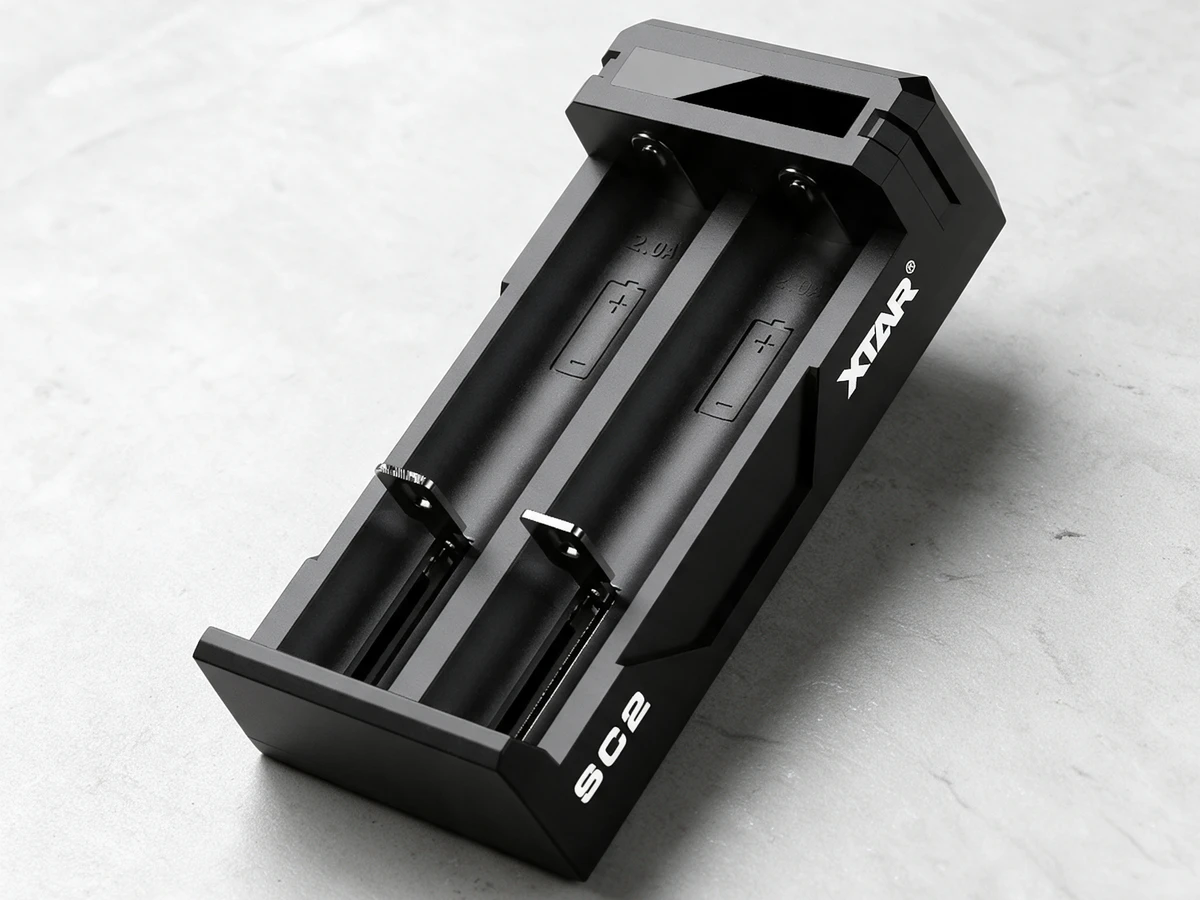
Use the USB charging port only as your device's manual intends. That covers the power adapter, the cable and the permitted charging power. With built-in batteries the device stays closed. Removable cells can be charged in a suitable external charger.
Damaged cables, loose sockets or e-liquid in the port are reasons not to start charging. Don't charge under a blanket or overnight while you sleep. Leave the device lying while it charges instead of vaping on it.
Use cells of the same type and a similar condition. A pair of batteries used together is also called a married pair in the scene. Keep the pair together and don't mix an old, weakened cell with a new one.
Marking cells as a pair doesn't replace checking each one. As soon as one cell is damaged or reacts noticeably differently, stop using the pair in the device. Also check the manual for your multi-cell model.
Removable batteries belong in a sturdy battery case with separate compartments. Loose cells next to keys, coins or other metal items can short-circuit. An intact wrap doesn't replace the case; they do different jobs.
Switch the mod off for transport and lock it against accidental firing. Store batteries dry, out of direct sun and out of reach of children. Don't leave them in a hot car. For longer storage, follow the recommended charge level of the specific cell.
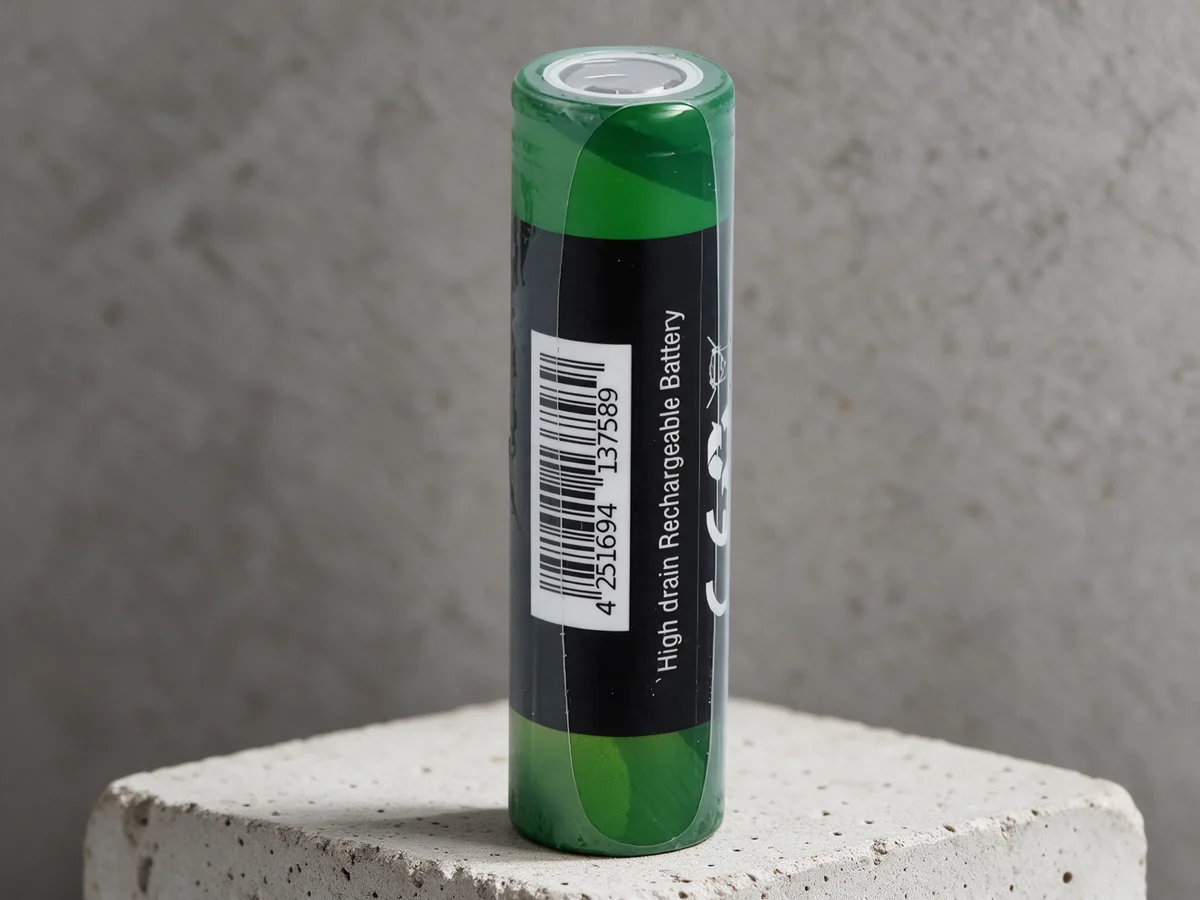
The marking helps you identify the cell. Also verify the exact cell type.
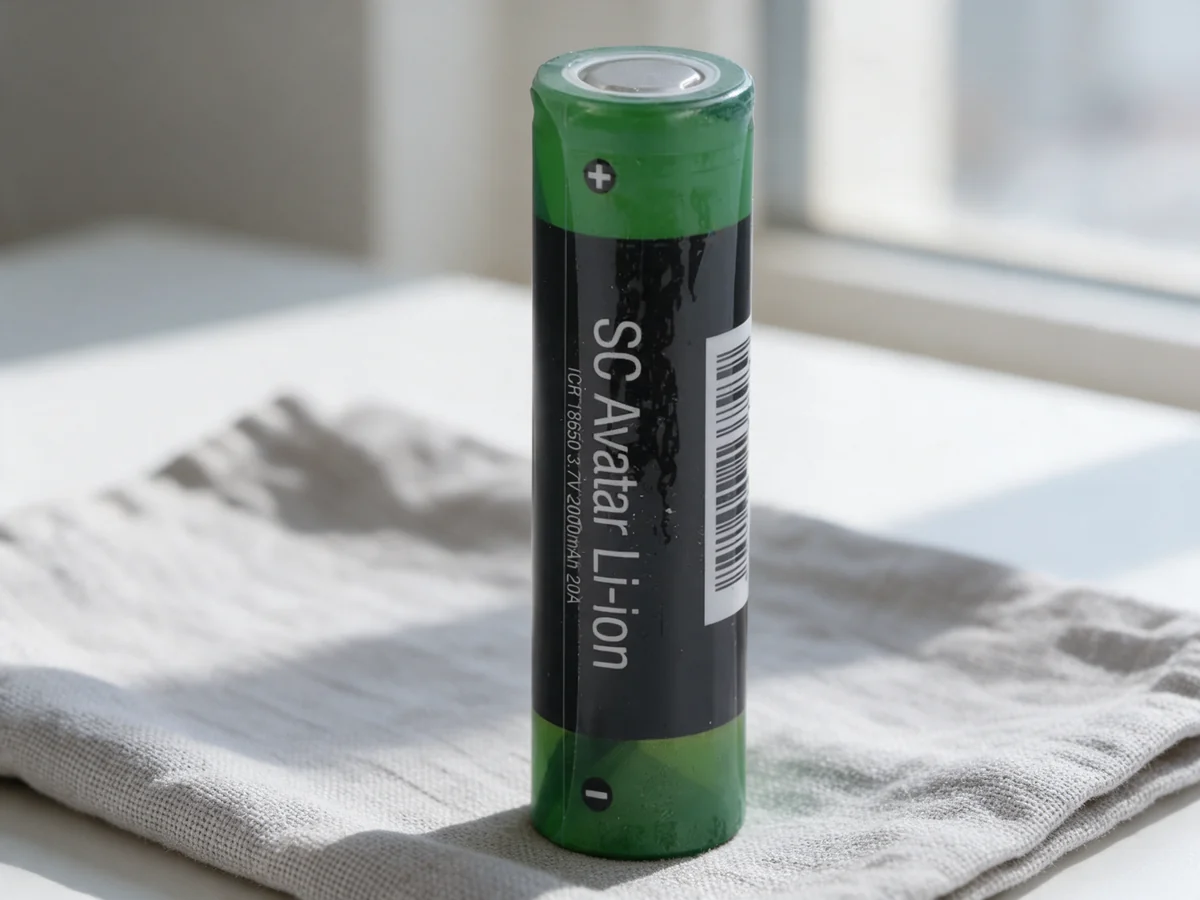
Read the type designation and check the whole wrap. The photo is no substitute for a condition check.
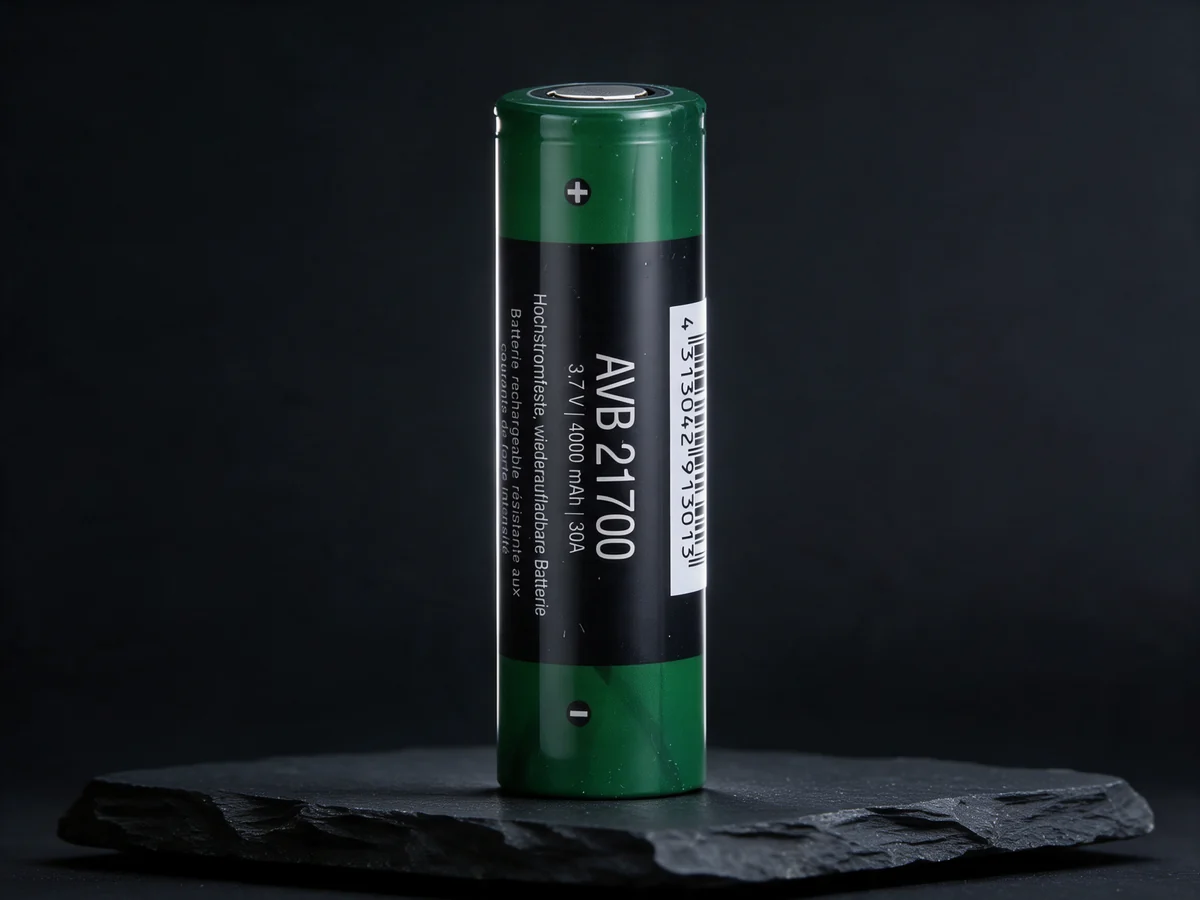
The insulation around the positive terminal is also part of the check before inserting the cell.
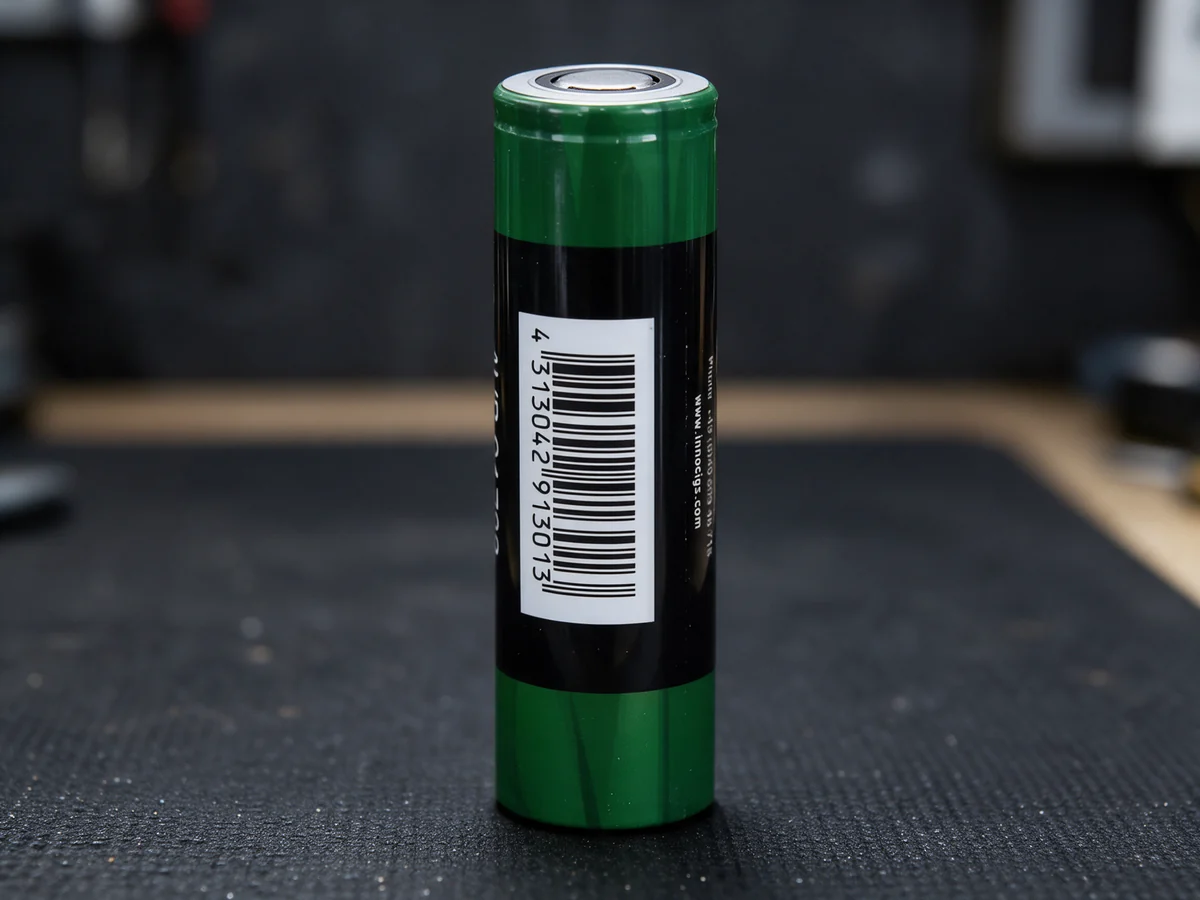
Here too, the specific cell approval is what counts. The barcode alone doesn't confirm a fit.

Check the back of the wrap too. Dents, deformation or corrosion mean the cell shouldn't be used.
| Observation | Next step |
|---|---|
| Tear in the wrap or missing insulation | Don't insert or charge the cell; have it checked by a professional |
| Dent, deformation, fluid or corrosion | Stop using the battery; find out about a suitable take-back option in Germany |
| Unusually strong heat | Stop using and charging as far as that's safe to do; don't touch or remove a hot battery |
| Device doesn't recognise the cell | With the device off, check type, polarity and dry contacts; don't bypass any protection feature |
If there's smoke, hissing or fire, keep your distance, get other people out of the danger area and call the fire brigade on 112. Don't try to carry the battery outside in your hand. In Germany, defective batteries don't belong in household waste. The return route is explained in How to dispose of a vape, battery and pod.
Don't keep using or charging it. Have it checked to see whether only the shrink sleeve is damaged or the cell too. A new wrap doesn't fix a dent, corrosion or internal damage. Tape doesn't replace the insulation.
You can't tell from the size alone. Capacity and current rating depend on the specific cell model. Only use the format intended for your device and the matching current rating.
The message can appear under load or be caused by poor contacts. Switch the mod off and check the cell type, polarity and dry contacts. If the message persists, have the battery and device checked; don't bypass the cutoff.
No. Don't deliberately run it down to failure. Keep an eye on the battery indicator and recharge with a suitable charger. Deeply discharged or unclear cells are not something to attempt a DIY revival on.
Don't open the device to do it. An integrated battery isn't a normal removable battery. If it's defective, use the intended service or take-back route. You only take removable cells out through the battery compartment meant for that.

About the author
Philip
Vape veteran
For this article
From the same series
Vape Guides · 6 min
MTL, RDL or DL: ohm, watts, airflow, e-liquid and nicotine strength compared by draw style, and which pod system or tank suits your draw.

Vape Guides · 6 min
Prefilled pod or empty pod: fill volume, nicotine, flavours, effort and running costs compared, plus the 10-ml systems and which system suits you.

Vape Guides · 7 min
Buying a pod system: resistance, battery, fixed or replaceable coil, airflow and draw activation explained, plus which pods and coils fit which device.
Advice & knowledge
Tools
Knowledge